Prentice Hall Brief Review United States History and Government 2019 Answers
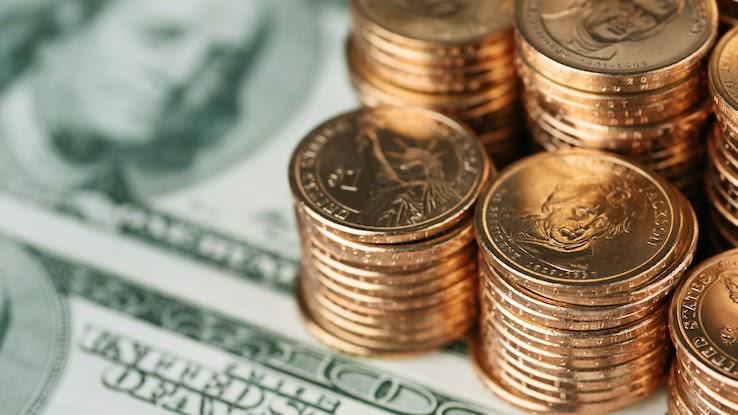
Take a look in your car's cup holders or that jar of loose change lurking in the kitchen cabinet. Do any glints and glimmers of gold take hold of your center? If so, yous might count yourself among the lucky owners of a Presidential $i — a relatively rare and decidedly novel type of coinage that features engravings of U.South. presidents' faces and the Statue of Freedom, all washed up in a warm, golden metal blend that we don't see as well often in U.S. currency.
For just a few years in the early 2000s, the U.S. Mint oversaw the Presidential $one Coin Program, which produced special coins that honored, as you might accept guessed, American presidents. Only not every U.S. head of country ended upwardly with their likeness boldly born in bas-relief on the faces of our spare change. And that's just 1 element of what makes these coins then interesting. Whether yous fancy yourself an aspiring numismatist or an armchair historian, you'll relish broadening your agreement of this U.S. Mint program — and perhaps even learning what these coins could be worth today.
Where Did the Idea for the Presidential Golden Dollars Come From?
In 2005, Congress passed the Presidential $ane Coin Act, and Section 101 of the act offers an interesting explanation for the reason why. The Sacagawea dollar coins that were introduced into circulation in the United states of america a few years earlier had not proved very pop — people just but didn't like using dollar coins for transactions. But Congress believed that having a widely circulated $1 coin bachelor was important for supporting certain economic sectors and situations, including "public transportation, parking meters, vending machines and depression-dollar value transactions." If there were no dollar coins widely used and in apportionment, merchants and vendors would incur greater costs, some members of Congress argued, and later would be forced to pass those costs on to consumers.
At the same time, Congressional leaders had taken note of how popular the 50 States Commemorative Coin Program had been — peculiarly from an education perspective. Each coin used state-specific imagery to convey an interesting factoid, meaning each state'due south coin was unique. That made the act of collecting them appealing, too.
Armed with the results of a survey that showed Americans would actively seek a new money "if an attractive, educational rotating design were to be struck" on it, the Presidential $one Money Program was born. However, it's important to remember that these land coins were quarters, not dollars, and thus didn't face the aforementioned barriers to widespread use every bit dollar coins. The presidential golden dollars didn't supersede the Sacagawea dollar money first minted in 2000, either, merely were to be produced alongside that money.
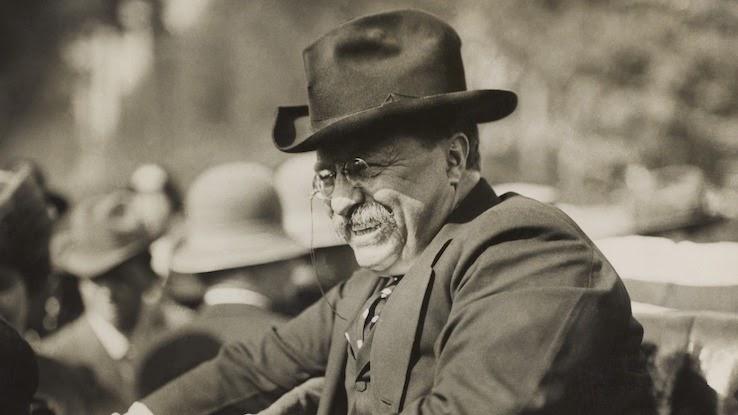
Big plans grew for the presidential dollars, and Congress went well beyond merely creating the program. It stipulated very specific requirements with the goal of returning to the "Golden Historic period of Coinage" initiated by President Theodore Roosevelt and spearheading an effort to create coins that didn't merely serve as tools for commercial commutation but that were besides aesthetic and beautiful.
How Did Congress Programme to Return to the "Aureate Age of Coinage"?
The Presidential $ane Money Human activity of 2005 proposed a list of specific requirements for the decorative new denomination to encourage a return to a legendary time in history when coins grew to exist regarded as art. Six of the many requirements the U.S. Mint and the coin designers were directed to incorporate include the post-obit:
Each coin should exist "an object of aesthetic beauty in its ain correct."
"Mint marks" such every bit mottos, emblems and the inscription of the yr should exist placed on the edges to allow for "larger and more than dramatic artwork" on the obverse and contrary of each coin.
The "tails" side of the coin would display a likeness of the Statue of Freedom big enough to be dramatic, just not then large that the coin would seem two-headed.
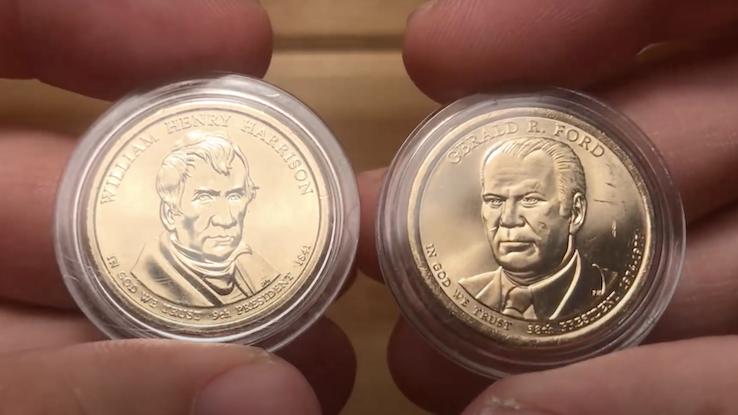
The "heads" side of the coin would prove the name and likeness of a president, forth with basic information about that president, including their term(due south) of part and the lodge of their period of service.
Each year, $i coins would exist produced to honor four presidents until all presidents were honored.
The project would be express in scope to deceased presidents, not living current or former presidents. Featured presidents needed to have been deceased for at least 2 years before appearing on the coins.
So, how were these stipulations meant to hearken dorsum to coinage'due south purported "gilt age"? A few years after taking role in the early 20th century, President Theodore Roosevelt sent a letter to then-Secretary of the Treasury Leslie Shaw explaining how U.S. coinage was "artistically of atrocious hideousness" — a scathing take on the appearance of American money. Roosevelt likewise asked Shaw if the Treasury would consider employing Augustus Saint-Gaudens, a Beaux Arts-era sculptor, to create some coin designs that ameliorate represented the state via their beauty. As a upshot, Saint-Gaudens created 2 coins that take become beloved among collectors: the $ten eagle and the $20 double eagle, both of which featured depictions of Lady Liberty and — yes — eagles.
The requirement for the Presidential $ane coins to feature the Statue of Liberty is a definite nod to the Saint-Gaudens designs and the "golden era" of coinage, but the level of particular — that need for "larger and more than dramatic artwork" — is another. The $20 double hawkeye money reportedly needed to undergo 11 separate strikes to bring out the high level of detail of the blueprint; the coins' faces were so intricate and their relief and then high that bankers couldn't stack them properly. While that wasn't what Congress had in listen when passing the 2005 coin human action, that'southward the spirit in which the regime wanted the presidential dollars to be designed: ample detail and beauty to appropriately honor the leaders stamped beyond the coins' faces.
Does Every President Have a Golden Presidential Dollar?
In total, twoscore American presidents have been honored with gilt presidential dollars. The excluded presidents are Jimmy Carter, Neb Clinton, George Westward. Bush, Barack Obama and Donald Trump, who oasis't been honored on coins because they're still living — and who might not be honored on presidential dollar coins someday presently. Bated from the fact that they're non deceased, what's the reason for this exclusion?
In 2011, Vice President Joe Biden and Secretarial assistant of the Treasury Timothy Geithner paused the Presidential $1 Money Program equally a toll-cutting measure. At the time, the U.S. Federal Reserve had stockpiled enough of these $one coins — more than than a billion — to meet demand for at least a decade. Biden and Geithner noted that the conclusion to stop the plan would save taxpayer dollars because, co-ordinate to a document released by the Treasury, "minting $1 coins that ultimately stop upward sitting in Federal Reserve Bank vaults –— and serve no useful purpose for businesses, fiscal institutions and consumers— is simply not a prudent use of taxpayer resources." Catastrophe production of these coins was a move that would help the authorities accomplish its goal of creating less waste and would free up taxpayer money in the process.
Past the time the program was terminated, the Mint had produced presidential golden dollars for all deceased presidents up to and including Ronald Reagan and would produce no more than — salvage for a 4-year special run of coins produced until 2016 for collectors, along with one other exception. In February 2019, Senator John Cornyn introduced a beak for the production of a Presidential $one coin honoring President George H. West. Bush. The President George H. W. Bush and First Spouse Barbara Bush Coin Act was passed into law in January of 2020, and the design of Bush-league Sr.'due south coin was revealed on December iv, 2020.
How Many Presidential Golden Dollars Are Out In that location?
Over 5 billion golden presidential dollars were produced under the Presidential $1 Coin Plan, not including the coin honoring President George H. Due west. Bush. The U.S. Mint produced the coins at its facilities in Denver, Colorado, and Philadelphia, Pennsylvania. The president honored with the highest total mintage (the number of coins produced) is President George Washington, with over 340,000,000 of these golden coins bearing his likeness having been produced. At the other end of the spectrum, the president with the everyman mintage is Woodrow Wilson at 7,980,000.
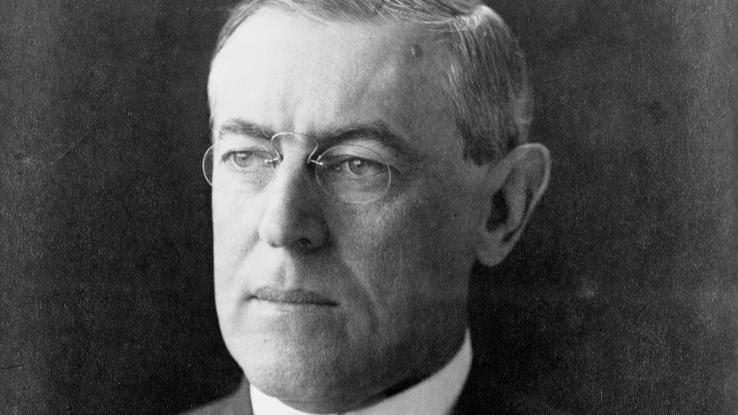
Production numbers dropped significantly midway through the running of the Presidential $1 Money Program. Of the first xx presidents from Washington to Garfield, no leader was honored with a mintage of fewer than 72,660,000 coins (President Andrew Johnson). Those who served afterward President Garfield (presidents Arthur to Reagan, skipping President Carter) were honored with far fewer coins. The highest mintage among those presidents was President Cleveland (with two split up runs of 9,520,000 and 14,600,001) followed closely by President Reagan (13,020,000).
Are Presidential Dollars Worth Anything?
Today, you can buy presidential aureate dollars from the U.S. Mint at specified times, though the coins are not office of its standard catalog. Until 2011, the coins were distributed past the Mint to banks and fiscal institutions, but that's no longer the example. The Mint still releases Presidential $ane coins into the "secondary market," where you can find them available for auction online and from money dealers. The U.S. Mint likewise releases 250-money numberless and rolls of the dollar coins, which are typically available through dealers. For a cursory time starting time in 2008, buyers could even order them through a plan called the $one Coin Direct Ship Program — but the programme didn't last too long.
As for their value? About of them are worth the amount stamped on their faces — $1. At dealers or from collectors, some earlier-mintage coins may be priced higher but based on the lower number of such coins available. Proof coins, which are samples made to check the dies that cut and stamp the coins, sometimes sell for up to $x apiece. The nearly valuable of the gilt presidential dollars are those that were produced with errors. One item 2007 mintage of coins honoring President George Washington had missing edge lettering, which can see those particular coins selling for $5,000 or more.
Will you get rich off Presidential $1 coins? Not probable, but, like collecting other objects, there's plenty of fun in the hunt and in learning the history of these coins and presidents — which, of course, was office of Congress' aim in the first identify.
Source: https://www.reference.com/history/history-united-states-golden-presidential-dollars?utm_content=params%3Ao%3D740005%26ad%3DdirN%26qo%3DserpIndex

Post a Comment for "Prentice Hall Brief Review United States History and Government 2019 Answers"